
How Fast Can You Get a Notion Workspace Up and Running?
The Seduction of Speed
The most common question I hear in sales conversations is: «How fast can you get a Notion workspace up and running?»
It’s an understandable question. In business, speed is often treated as a guarantee of winning. If you just move faster than everyone else, you’ll win the race — or so the thinking goes.
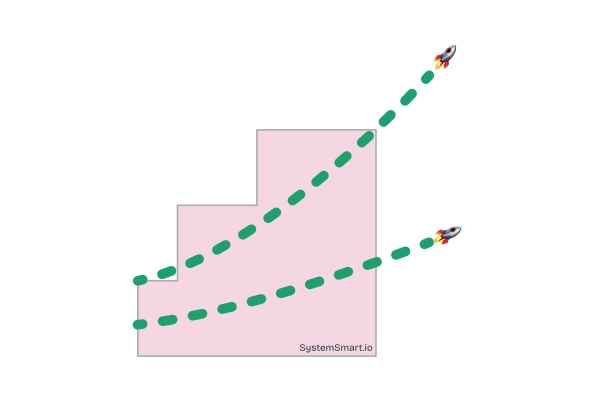
In the Notion world, that “speed is everything” mindset often means grabbing a template from the gallery or buying a pre-made one from someone else. It looks like progress — something is set up, boxes are ticked. But it’s superficial. It’s an artificial structure, not one born out of your business’s reality. It’s not your system — it’s someone else’s brain.
And that’s where the myth of speed starts to collapse.
The Cost of Skipping Diagnosis
When speed outruns diagnosis, the system looks finished but isn’t functional.
Key processes remain unmapped. Workflows are not reflected in the new system. Inefficiencies are ignored, not addressed or just duplicated. ROI suffers not because the system was built wrong, but because the real friction points weren’t considered.
The cost shows up later: endless patchwork, frustrated teams, and leaders wondering why they invested in a system no one loves to use and the tool gets the blame.
Skipping diagnosis isn’t just a missed step. It’s the difference between duct taping and building something that actually works.
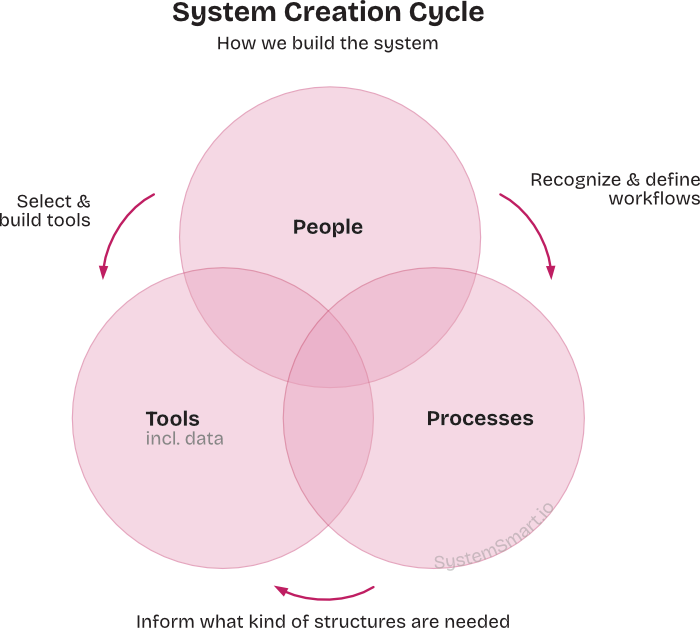
The Paradox: Slow Creates Speed
Here’s the paradox: when you slow down at the beginning, you end up moving much faster in the long run.
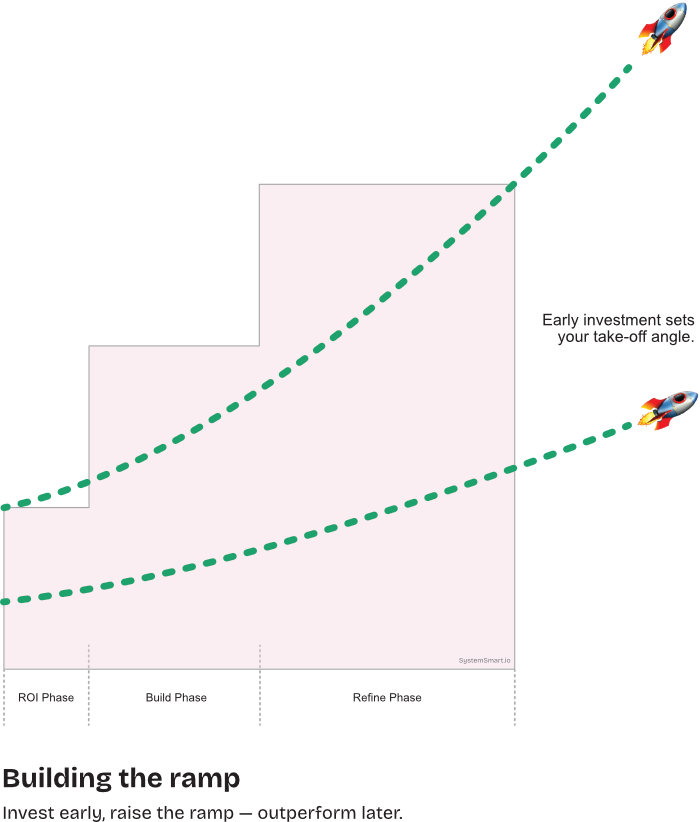
Think of it like building a rocket ramp. You don’t just pour concrete for a foundation and call it done. You build the entire launch pad — because what matters is not just stability, but the angle of take-off.
A business system works the same way. If you rush to “get something in place,” you may feel like you’re moving, but you’re just spinning your wheels, not really lifting off. When you invest time in diagnosis, tailoring, and iteration, you’re not wasting time — you’re creating the ramp that lets the business lift off.
And once that ramp is there, the angle of acceleration is completely different. Every process runs smoother, every handover is clearer, every piece of knowledge has its place. Suddenly the system doesn’t just hold you up — it pushes you forward.
That’s why the slow way is actually the fast way.
AI as the Rocket
Now add AI into the equation.
If the system is the ramp, then AI is the rocket. With a solid, well-built structure beneath it, AI can take off at great speed — multiplying both output and efficiency. But without that ramp, AI has nothing to launch from.
And here’s the real edge: in the age of AI, competitive advantage isn’t just about doing more, faster. Anyone can do that. The advantage comes from quality.
A strong structure ensures AI doesn’t just generate output, but does so in the right context, aligned with your processes, at a level of quality that others can’t sustain. That’s the moment when speed turns into market power.
This is exactly why my The System Transformation approach exists. I call it preparing the soil: plant the system, let AI bloom, and your organisation grow. Without solid soil, AI has weak roots to build on.
So, How Fast Can You Really Get a Notion Workspace Up and Running?
The honest answer: it depends. But speed is possible — when it’s focused and structured.
Here’s how I build systems with clients:
- ROI Phase – Diagnose, surface inefficiencies, figure out which processes bring the biggest return if improved, and prioritise what we will build in the next phase. Without this, you’re just laying templates on top of old habits.
- Build Phase – Design and deliver a customised prototype — usually within 2–4 weeks, depending on company size and complexity. It’s not the final product, but it’s tangible and ready to be tested by the core project team. During the testing cycle they provide feedback and I will improve the prototype accordingly. At the end of the testing cycle, we roll-out and train people.
- Refine Phase – This is where we operationalise the system. Weekly tech calls and iteration turn the prototype into a strong, lasting structure that actually matches how the business ticks.
Full phase timing see The System Transformation.
So yes — you can have a Notion workspace up and running in a matter of weeks. But the real question isn’t “how fast.” The real question is:
Are we building something that will still work in the age of AI and give us a competitive advantage in the long run?